American Action Fund for Blind Children and Adults
Future Reflections Special Issue on Technology LETTER FROM THE EDITOR
Stepping into the Future
by Deborah Kent Stein
 In 2012 Future Reflections published a special issue on technology. Mark Riccobono wrote about “The Promise of Accessible Technology: Challenges and Opportunities.” Gary Wunder contributed his ideas about “The Dream of the Past, the Hope for the Future,” and Amy Mason shared her thoughts on “Mainstream Access to Ebooks: What Works, What Doesn’t, and What Is Still Unclear.” While George Kerscher wrote “The Future of Digital Publishing: An Optimist's View,” and Betsy Burgess and Valerie Chernek celebrated “Breaking Down the Barriers” with a decade of digital access through Bookshare, the excitement about technology was tempered with caution. There were lots of great ideas out there, lots of dazzling prototypes, but for the blind community it was still a matter of “Wait and see.”
That was thirteen years ago.
Today, as Future Reflections revisits the technological revolution in another special issue, the world continues on its dizzying rush into a digital wonderland. Today our age-old concerns over access to print text have nearly disappeared, thanks to Audible.com, Kindle with VoiceOver, Bookshare, and a host of other resources. Apps on the smartphones we carry in our pockets can help us read our mail, connect with like-minded people from around the world, and find our way to our gate at the airport. Artificial intelligence can troll the web to unearth obscure facts and figures in seconds flat. How many of us dared to imagine such possibilities back in 2012?
While technology has opened almost inconceivable opportunities for the blind community and for the world at large, blind people still face barriers. As changes in technology accelerate at an ever-faster pace, accessibility is too often left behind. In a world where education, the workplace, and even recreation depend more and more upon digital access, we in the blind community run what feels like a never-ending race to catch up.
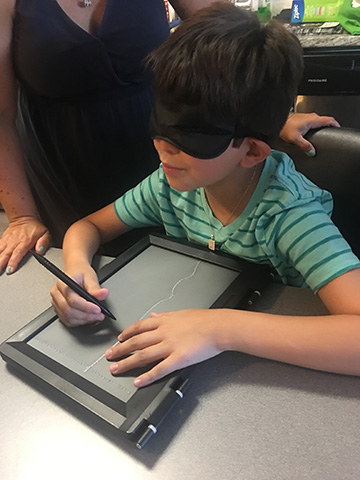
We have come a tremendous distance, but many contributors to this new special issue temper their excitement with a dash of warning. Brett Boyer states, “Access technology isn’t magic. It’s a set of tools, and tools are only as powerful as the person using them.” Jonathan Mosen writes about “AI and Our Blind Children: The Potential and the Pitfalls,” and Ameenah Ghoston emphasizes the importance of time-honored tools such as the slate and stylus in “High Tech, Low Tech.”
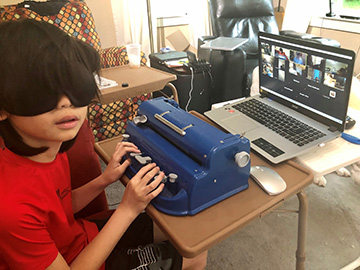 Most contributors to this special issue of Future Reflections share their genuine enthusiasm for cutting-edge developments. Anne Westbrook describes how her initial skepticism faded when she discovered how much technology helped her blind daughter learn and connect with others. Isaac Raske, a high school student, describes how technology benefited him throughout his schooling and suggests ways for teachers to help blind students develop their tech skills. Chuy Vaca and Raúl and Stacie Gallegos share their experiences and strategies teaching access technology.
Technology has transformed life for all of us, including those of us who are blind or have low vision. The contributors to this issue of Future Reflections celebrate the opportunities technology has opened for us all. Nevertheless, we must continue to value and nurture the blindness skills that have served us well in the past. Building upon this foundation we can master new technologies that will widen our prospects for the future.