The First Time I Never Voted
by Tom Page
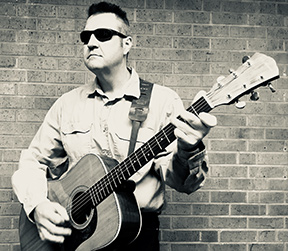 From the Editor: Tom Page is the president of the National Federation of the Blind of Kansas, a member of our National Scholarship Committee, a musician, and, of course, an American citizen with certain inalienable rights. Here is what he has to say about voting:
Growing up as the child of a political scientist father and an MD mother, I was taught the importance of voting at an early age. Until I was old enough to wait while my parents voted (six or seven years old), my little sister and I were in the voting booth with one or the other parent. Before their marriage they both were active in the civil rights movement of the 1960s, and later as a family we were actively engaged in the peace and social justice movements of the 1970s and 1980s. I developed much of my understanding of the nature of politics from my parents’ “hands-on” approach for which I am grateful. I also must credit two great books that I read as a young person which shaped my perceptions regarding voting. The first is Who Gets What by Harold Laswell, the second is A People’s History of the United States by Howard Zinn.
Therefore, I grew up thinking of voting as not only a mechanism to influence policy-making; I considered it a social responsibility and a civic duty. I remember well the first time that I voted. I was in my second semester of college and had returned to my familiar hometown. I walked to a nearby grade school and along the way wondered how in fact I would be able to get it done. Will the lighting be bright enough? Will the font be large enough? Will I be able to work the machine? These were some of the questions running through my brain.
In 1991 I did not understand that I was blind, nor did I picture myself as blind. I had no exposure to blindness skills. What’s more, the Help America Vote Act had not been passed. Therefore, filled with worry and armed with nothing but hope, I made my way to the check-in table. When I got there, a loving voice called out “Hello, Tommy!” Come over here.” The voice belonged to Bobbie Gonzales, one of my favorite next door neighbors. Bobbie was familiar with my blindness (probably she was more aware than was I). She checked me in and suggested that if I wanted, she could orient me to the machine since this was my first voting experience. It turned out that the buttons on the machine were soft switches with lights that lit to inform the voter of the button’s state. Unfortunately, the buttons and lights were not lined up to the tiny text in a way I could understand. Mrs. Gonzales saw I was having difficulty and told me that she could run the machine for me if I wished. I agreed to this idea, and for the next five years I continued voting in this way. Mrs. Gonzales was there every time.
The passage of HAVA in 2002 prompted states to adopt accessible voting machines. I was not connected with the NFB at that time, so I was unaware of the work put in by blind Americans to pass this important legislation. Among other things, it for the first time mandated that blind voters be able to vote independently and privately (rights that others had enjoyed since the 1700s in the case of men, 1920 in the case of women, and 1965 in the case of voters of color.
Although I was not part of bringing HAVA about, I certainly have benefited from its passage. The first year that the new machines were available in Kansas was coincidentally the year my dear old friend Mrs. Gonzales retired as a poll worker. Thanks to her and the NFB, I never was put into the situation so many have faced where they must trust and rely on strangers to help them access the ballot.
I never had to face that fear in fact until the year 2020. In response to the COVID-19 virus emergence, the state of Kansas decided to turn the scheduled 2020 democratic primary into a mail-in-only election. Sadly, there was little or no consideration given to accessibility for blind and print disabled voters. This was despite many attempts by the Kansas affiliate to draw attention to the gaps that already existed in absentee voting, early voting, and online registration in the state. I found out about this decision or chain of decisions when I called the party headquarters to request an accessible ballot. Not only was I told there were no accessible options at all; they never even sent me the inaccessible one.
This is how I came to the first time I never voted. I was, of course, not alone. Many active NFB members in the Kansas affiliate found themselves in the same situation. Working under Mark Riccobono’s leadership, we are taking action to protect our rights in future elections. I sincerely hope that the infamous spring of 2020 will be the only election in which I never voted and that I can enjoy private and independent balloting in the future!