Remembering the Why, the Purpose, and the Philosophy: My Journey to Becoming a Structured Discovery Cane Travel Teacher
by Denise Mackenstadt, NOMC
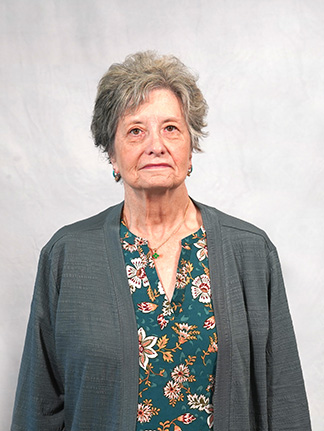 From the Editor: Denise Mackenstadt is a cane travel instructor based in Washington State, where she lives with her husband Gary, and has been a member of the National Federation of the Blind since 1970. This article is adapted from remarks she gave at the Contemporary Issues in Rehabilitation and Education for the Blind Conference put on by the National Blindness Professional Certification Board as part of the 2025 National Convention. Along with her compelling personal story, the article contains much insight into Federation philosophy and its relationship to the Structured Discovery teaching methods that are a hallmark of Federation training centers and increasingly accepted throughout the blindness field. Here is what Denise shared:
In 2005, I finally obtained my dream job: I completed the training to become an orientation and mobility instructor. I passed my certification test for a National Orientation Mobility Certification (NOMC) supervised by the National Blindness Professional Certification Board (NBPCB). That next school year I was hired at my first job as an orientation and mobility instructor. My path to this point had been a long journey of mentoring, philosophy, and practical skill building—a journey that started many years earlier.
While in high school, I met blind peers for the first time. In addition, I met teachers of the blind and mobility instructors who worked with these students. I became friends with some of these blind high school students. The mobility instructors were interns attending the California State University at Los Angeles master’s program in orientation and mobility. I became fascinated with what they were doing. My blind friends had not received any training before then. At the time, it was widely believed that blind people were not mature enough to use a cane until age sixteen, as if cane travel were akin to driving. On campus, blind students used a sighted guide or did their best in the crowded halls trying to avoid other students. Mobility instructors were exclusively sighted, since it was presumed blind people could not teach cane travel. This practice continued until the 1990s. My friends did not use their canes outside of mobility instruction.
The low expectations and discrimination faced by my blind friends became especially clear during the Los Angeles teachers’ strike in 1969. Administrators decided to sequester blind students in the nurse’s office “for their safety.” Many of the blind students saw this policy for what it was: custodialism. This custodialism was predicated on the assumption that blind people were unable to be responsible for their own wellbeing. All the students at this high school were expected to be safe. Protocols were put into place to protect all the students during this work stoppage. But the blind students were singled out. It was the first time that the blind students did not have advocates, adults or other students, to stand up for them. It was a time they learned that standing up had to be done by them. During this period, the campus became “open,” allowing students to leave school grounds if they attended class. For blind students, this was the first chance to travel independently. The experience was a turning point—one that revealed to them, and to me, that their independence was possible and in their own hands.
After high school graduation, I enrolled in college with the intention that after receiving my BA I would transfer to California State University at Los Angeles to go into the orientation and mobility program. This was my dream. In 1970, my blind friends introduced me to this organization that they had become involved with. This was my introduction to the National Federation of the Blind. Like many others, I did not initially join the Federation for an altruistic reason. It was 1970, and we were out on our own and wanted to have active social lives. Members of the local Federation chapter happened to throw good parties. I was eighteen years old, and obviously I was drawn to groups that I could enjoy.
This was a time of social upheaval and fast changes in the lives of Americans, including blind Americans. As time went on, the side of me that wanted to be part of advocating for a better world for all people, including blind people, made my interest in the National Federation of the Blind more important. I immersed myself in the literature and speeches of Dr. tenBroek and Dr. Jernigan. I attended my first California State Convention in 1971. The national representative was Dr. Jernigan. His speech and presence had a profound effect on me. As a sighted person, I began to try to figure out my role in this organization that was directed by and for blind people.
I was still intending to go to Cal State at Los Angeles to study to become an orientation and mobility instructor. I met and was impressed by many O&M professors in the field. However, I was influenced by the belief that an instructor needed sight to teach travel with a cane. This belief was so ingrained that I had the audacity to write a letter to Dr. Jernigan saying that I did not believe that a blind person could teach mobility. He responded in the kind and understanding way that he always did. I began, as a result, to reevaluate this belief. I later learned that he had used my letter as a discussion item at a leadership seminar. I must admit that I had mixed emotions about that. I finally realized that this was a compliment.
In my NFB chapter there were several former students of Dr. Jernigan from Iowa. They were the first individuals I knew who demonstrated the advanced skills, particularly in mobility, that they had received at the Iowa Commission for the Blind. They demonstrated the use of a longer cane, the ability to advocate for themselves, and a belief in their own self-determination. I was intrigued and, as a result, began to ask questions and research what was happening at this unique training center.
In 1973, I met someone who became the most important person in my life. Little did I know that Gary Mackenstadt would become a lifetime partner. We married in August of 1973. We have spent the last fifty-two years together. It was rough the first couple of years, as Gary sent out two hundred resumes to colleges throughout California to get a teaching position. He finally got a part-time job at Los Angeles City College. We felt in 1974 that we needed to attend a national convention of the Federation to learn more about blindness and the movement. The convention cemented our belief that the National Federation of the Blind was going to be an important organization in our lives. I continued to consider my role as a sighted person in this organization. Dr. Jernigan said to me that what I held in my heart about the possibility of blind people being in control of their lives was all that mattered. This statement was important to me.
Because of the need to frequently move for Gary to improve his career, I was unable to get the university training I would need to teach orientation and mobility for many years, but both Gary and I continued to learn and grow in the National Federation of the Blind. In 1975, we were invited to a leadership seminar in Des Moines, Iowa. Gary was elected to the Board of Directors of the American Brotherhood of the Blind, later to become the American Action Fund for Blind Children and Adults, which historically had worked with the deafblind and had a publishing house of print/Braille “Twin Vision” books. After the 1976 convention, Gary took a job with Blind Industries and Services of Maryland (BISM). This agency was developing an NFB-based blind training program. Gary was the director of the rehabilitation department at BISM. I got a job at the City of Baltimore program for recreation for special needs populations. This included working with blind and other disabled individuals using the city recreation services. The director of this program was John McCraw. John became an important mentor for me. He was the president of the Maryland affiliate of the National Federation of the Blind. Here again I was able to get to know a strong and independent blind person. John spent much time with us talking and helping us learn. Our time in Baltimore gave us the opportunity to get to know people who would be lifelong friends and mentors: Don and Shirley Morris, Jim and Sharon Omvig, John and Connie McCraw, Dr. Jernigan and Mrs. Mary Ellen Jernigan, Judy Sanders, and many more. We moved to Boston, Massachusetts, for Gary to start working for the Office for Civil Rights at the Department of Health, Education, and Welfare (HEW), later the US Education Department. We remained friends with those we knew in Baltimore. Our time in Boston was important because we adopted our daughter, Amanda, while we were there. Again, I had to postpone my dream of becoming an orientation and mobility instructor to put emphasis on my family.
We moved to Washington State in 1980 and with Bennett Prows, Hazel tenBroek, and Marci Carpenter, we organized a new affiliate. In 1982 our son Eric was born. We have been in Washington State ever since. During my time in Washington, in conjunction with other community activities, I became a known advocate for families with blind children. I worked with parents in a positive and proactive way, introducing them to the Federation philosophy while supporting their efforts to raise blind and low-vision children. Some of these children had significant additional disabilities such as intellectual disabilities, deafness, emotional/behavioral disabilities, and mobility disabilities. This was a tremendously satisfying experience for me.
Subsequently I worked as a Braille transcriber/paraeducator for ten years. One of the most rewarding experiences I had was to receive the National Federation of the Blind Distinguished Educator of Blind Students Award in 2001. I am proud to be the first paraeducator to receive this award.
In 2002, I finally had an opportunity to begin a graduate program in orientation and mobility instruction. Stephen F. Austin State University in Texas received a grant to train teachers of orientation and mobility in the Northwest United States, which included Washington State. I was eligible to participate in this cohort. The classwork was conducted by video conferencing. A group of us met at the closest college with the facilities to do our lectures by video. The second year we met by telephone conferencing. I really missed meeting in person with my fellow students. I received my blindfold training in Boise, Idaho, over a four-week period. We didn’t even use our blindfolds the whole time because we traded off in a two-person team. This program also used the guided learning curriculum and philosophy. We did not use Structured Discovery (SD) techniques or philosophy. As you know, this was not near enough time to become proficient with the use of a cane with a blindfold. In addition, a person cannot develop confidence in their skill to teach under a blindfold within such a short period of time. I brought to the training my own NFB cane. This identified me as a Federationist. A sense of suspicion among the university instructors infused the experience at first. When they saw that I participated to the best of my ability, they relaxed some. I did say that I was willing to use a different cane, but I felt for safety’s sake I would insist on a longer cane than prescribed. This was not a problem because they could not find the right length among the canes they were using, so I just used my NFB cane. I performed my skills at an acceptable level to complete the instruction successfully.
A few things happened which I thought interesting. First, I was able to get the group to participate in a summer picnic with the local NFB chapter in Boise. It was an informative and interesting experience for my fellow students. Also, my fellow students were impressed with how confident and fluid I was in my cane usage. They did not get that this was a result of a longer cane and an important philosophical base. My concluding drop route was not really a drop route as we know it. We planned our own route visually. We were expected to know where we were dropped and to travel the route as we had planned. An interesting occurrence illustrated the philosophy of the guided learning approach of instruction. At one point I became disoriented. Even though I was disoriented, I did not remove my blindfold. I worked my way out of it and completed my route. The instructor made the comment that I became disoriented because I had not mapped my route to avoid the area in which I had difficulty. I thought this was telling. I need to thank Ramona Walhof and Jan and Harry Gawith for their hospitality during my blindfold training in Boise. This experience taught me that my understanding of Structured Discovery cane technique was an extension of the Federation philosophy that was already part of me. I was going to be a Structured Discovery instructor because of the leaders I knew in the NFB and the philosophy which was engrained in me.
I went home and studied everything I could get my hands on. I spoke with other instructors who used Structured Discovery philosophy and techniques. In the end I knew that my attitudes were all about the philosophy of the National Federation of the Blind. Would I have wanted to have a full experience of attending Louisiana Tech University? Of course. But circumstances would not allow for that. As a result, even though I was eligible for ACVREP Certification (COMS), I chose the NOMC. I know that attendance at an SD training center is now required for NOMC certification. I personally regret not being able to do that, but I was able to pass my NOMC examination. This was the culmination of my dream of becoming an orientation and mobility instructor who uses SD techniques and philosophy.
As with many of you, I found that using SD training, philosophy, and techniques was looked upon by my professional peers with suspicion. I was even discouraged at times. My students were the most important examples of the success we achieve with SD training. I worked primarily with blind and low-vision school-age students. This included students with additional disabilities to blindness. This may be intellectual disabilities, neurodivergent students, mobility-impaired students, and deaf students. I grew to love working with students with additional disabilities. The success of Structured Discovery was evident in the success of my students. Over time, slowly, I gained the respect of those professional peers who wanted to learn about how I successfully taught students with all disabilities. I did have experience with professional peers who wanted to discriminate against my use of Structured Discovery. However, my students were the reason I had to continue to believe in the use of SD techniques and philosophy.
I found that my work brought tremendous satisfaction. My students needed the kind of training I was able to give them to live the lives they wanted. The National Federation of the Blind continues to be my grounding. I love to be around my fellow SD instructors at national conventions. These SD professional peers are the ones who keep me believing that I am doing what is right by my students.
Currently, I have the privilege of speaking to agencies, students, and training centers about successfully working with students who have significant additional disabilities. This is a passion I have. I want my fellow professional peers to understand that these students can successfully benefit from SD training. They have the same desire and need to have the philosophy and skills to determine how they live their own lives. As committed Federationists, we need to be committed to tolerance, understanding, and patience with all students, including students who have additional significant disabilities.
I want to end this presentation as I began. My journey has been because of my belief in blind people as the determiners of their own destiny. My belief in blind people has been a result of knowing members of the National Federation of the Blind. This belief has been challenged by other professional peers, but my students validate my belief in the success of SD. My mentors over this past fifty-three years have been of unfailing influence. The professional mentors I have found in the field as we use SD to instruct and empower our students have helped me continue to learn. These mentors include, but are not exclusive of, Jeff Altman, Dr. Edward Bell, Duncan Larsen, Doug Boone, Merry-Noel Chamberlain, and Joe Cutter. My message to you is to continue to believe you are doing right. Your students will thank you.
I would like to leave you with my favorite quote. As Dr. Kenneth Jernigan said in his speech The Nature of Independence,
Hold your head high in the joy of accomplishment and the pride of independence—but not because of dog or cane or human arm, and not because of your ability to read Braille or use a computer. These are the trappings of independence, not the substance of it. They should be learned and used when needed—but they should be regarded only as means, not ends. Our independence comes from within. A slave can have keen eyesight, excellent mobility, and superb reading skills—and still be a slave. We are achieving freedom and independence in the only way that really counts—in rising self-respect, growing self-confidence, and the will and the ability to make choices. Above all, independence means choices, and the power to make those choices stick.