American Action Fund for Blind Children and Adults
Future Reflections Special Issue on Ethnic and Cultural Diversity BUILDING MOVEMENTS, COMMUNITIES, AND FAMILIES
Lessons from Dr. King
by Ever Lee Hairston
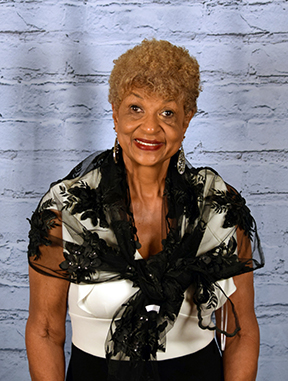 From the Editor: Ever Lee Hairston is a powerful speaker and a dedicated leader in the National Federation of the Blind. In this article she reflects on the intersection between her experiences as a person who is black, female, and blind.
I grew up on Cooleemee Plantation in western North Carolina. My father and my paternal grandparents all lived and worked there. My father was seventh in a family of twelve children, and I'm the third child in a family of seven. All seven of us were born on the plantation.
My younger sister was born with a serious liver disease, and she was in and out of the hospital. Our parents worked very hard to pay her medical expenses, but she died when she was sixteen, during my first year of college.
For elementary and high school I was bused to segregated schools for black children, passing several whites-only schools along the way. We never got new textbooks. All of our books were hand-me-downs. I enjoyed school, and I was always on the honor role. In high school I was a cheerleader, and I was even a debutante!
For two weeks every fall, and again for two weeks in the spring, my siblings and I had to stay out of school to work in the fields. We chopped cotton in the spring and picked cotton in the fall. I dreaded that field work, and I hated every minute of it! I'll never forget the day we came across a bunch of snakes! I ran screaming out of the field and sat on top of a big bag of cotton. I thought, there has to be a better life for me out there somewhere! That's when I made up my mind that I would work and save money to go to college.
During high school I began to notice that I had trouble seeing at night. My older sister and my two younger sisters all had the same vision issues, but we never talked about it in the family. One night my grandfather asked me to drive the tractor. As I headed down the road toward the house, it seemed to me that it was darker than usual. I told my grandfather, "I can't drive! I can't see!" but he didn't believe me. "Drive the tractor!" he said. "It's time for us to go home." He finally took charge when I started weaving back and forth on the road and nearly landed us in the ditch. Even then I'm not sure he believed that I couldn't see at night.
Shortly after I graduated from high school, I read a notice in the paper. An agency was looking for young women to work as live-in maids in New York. I decided to go to New York and make enough money to attend nursing school at Duke University in Durham, North Carolina. My parents fully supported me, but when I left home my grandmother warned me, "Gal, someone's gonna hit you in the head, and you'll be back here!" What a sendoff!
When I got to New York I was one of the first girls chosen to work. Men came to the agency and chose the girl they wanted. I noticed that if you had light skin you were more likely to be chosen than if your skin was darker.
I went with the man who wanted to hire me, and he took me to his home to meet his wife and children. Then he drove me back to the agency so I could sign some papers and accept the job. On the trip back he told me, "On your days off, you will be with me. That will be on Thursdays and every other Sunday." All I could think of was what my grandmother had said to me! No, he wasn't threatening to knock me on the head, but I was being threatened in another way.
When we got back to the agency, I ran inside and hid in the bathroom. I stayed there, crying and terrified, until I heard an announcement over the public address system. It said, "All girls who have not been chosen, get on the bus! We're going out to Hempstead, Long Island."
They drove us out to another agency, and the next morning the selection process started again. This time it was different, though, because husbands and wives did the choosing together. Again I was one of the first girls chosen. I went to work for a very nice family named the Bronsteins. Their little girl had kidney disease, and I strongly connected with her because of my sister. Sadly, she passed away before the summer was over.
One evening I took the bus into Brooklyn to visit a relative, and I got home much later than I expected. When I arrived at the Bronsteins' house, I couldn't see the front sidewalk. I had to shuffle with my feet to find my way to the house. It turned out that Mrs. and Mr. Bronstein were watching me from the front stoop. When I reached them they had a lot of questions. "Have you been drinking?" "Are you okay?" "What's going on with you?" Finally I broke down and told them, "I can't see." That was the first time I admitted to anyone outside my family that I couldn't see at night.
At the end of the summer I told the Bronsteins I was going back to North Carolina to enroll in nursing school. They were such kind, generous people! They bought me a plane ticket to Raleigh-Durham, and I took my first ride on an airplane. But when I applied to nursing school I was disqualified because I failed the eye exam. I had to give up my dream of becoming a nurse.
After that crushing disappointment I had to make new plans. I moved in with my aunt and uncle in Durham and enrolled at North Carolina Central College. During my second year there, Dr. Martin Luther King, Jr., visited the campus and spoke to us about our civil rights. At that time Sears Roebuck refused to hire black people, and blacks couldn't eat at Woolworth's lunch counters downtown. We couldn't attend the local movie theater unless we went in the back entrance and sat in the balcony. Experiencing that discrimination in Durham, and remembering the segregated schools I attended growing up, I welcomed the opportunity to fight for my civil rights. When I listened to Dr. King I really wanted to be part of his movement!
On one of our first protests, we marched five miles from North Carolina Central to Sears Roebuck. We were more than two thousand strong! When we reached Sears Roebuck we all sat down, holding hands, singing, and praying. The police came and ordered us to move, but we refused. After a while they drove buses at us and stopped just short of running us over! They started grabbing us and literally throwing us on board. Then they hauled all of us off to jail. I went to jail with Dr. King.
The police packed us into the jail cells like sardines in a can. All through that night in jail, we kept on singing. Dr. Ralph Abernathy came and got Dr. King out during the night, and the rest of us were released the following morning.
Being in jail that night was frightening, but the worst part for me was the disapproval of my parents and my aunt and uncle. They were terrified that they would lose their jobs because of my activism. It took a lot of courage for me to demonstrate against their wishes, but I knew I was doing what was right.
I worked in New York every summer while I attended college. While I was in New York in the summer of 1963, I heard that buses were taking people from New York to Washington, DC, for a massive demonstration. I was in the crowd at the Lincoln Memorial when Dr. King gave his landmark "I Have a Dream" speech. That was truly a historic moment!
I was still having problems with my vision, of course. Back at college the exam for my biology course was given at night. The room wasn't well lit, and I couldn't read the exam questions. I couldn't see the page well enough to complete the exam. In tears I went to the professor and told her I was unable to see. She was completely unsympathetic. "I've heard a lot of excuses," she said, "but this one takes the cake." I failed the exam and failed the course. It was the only course I ever failed.
It was devastating to me whenever people refused to believe that I couldn't see. They always said I didn't "look blind," whatever that meant. They thought I was faking as an excuse to get out of things.
I graduated from college in February 1965 and moved in with my brother and his wife, who lived in Camden, New Jersey. I found a teaching position that would start in September. To bring in some extra money, I applied to work as a bank teller until the fall.
I walked into my interview full of confidence. I had a college degree, and I was up north, in New Jersey, far from the segregation of North Carolina. I was shocked when the banker told me, "I would love to hire you, but we haven't begun to hire blacks yet."
When I walked out of the bank, I felt overwhelmed. I had run into so many denials in my life—denials because of my eyesight and denials because of my race. I was crying as I walked down Broadway in Camden. A man passing by recognized me because he knew my family. He walked me home, and I told him my whole story. It was the first time I really talked to anyone about my struggles. Four years later we were married.
My future husband took me to an eye clinic in Philadelphia. The doctors told me I had retinitis pigmentosa (RP), and they said I would more than likely go blind. I couldn't face the truth, and I kept trying to fake my way through. I only taught for three-and-a-half years. In 1969 the principal found out I was going blind, and I was forced to resign.
I got married in 1969, and my son was born a year later. When he was a year old I received another blow. My husband left me for another woman and took off to Mexico. I was convinced that he left me because I couldn't see.
Still pretending that I had normal vision, I went to work for the city of Camden. I got a series of jobs; whenever the staff found out that I couldn't see, I would move on. Finally, in 1983, I took the Civil Service exam and got an entry-level job as a counselor with the New Jersey Department of Human Services. The department sent me to Rutgers University to take courses in counseling. I felt this was an excellent opportunity. You don't need eyesight to be a counselor. Maybe at last this was a job where I would be secure.
As I moved up the ladder and became a supervisor, some of my coworkers resented being supervised by a black woman who was going blind. That's the way they saw me. By that time, though, I had developed a tougher skin. If they didn't want to be supervised by a blind black woman, that was their problem, not mine! By that time I had learned about the National Federation of the Blind. I hoped that some day I would get more involved with the organization and get the help I needed.
In 1987 I attended my first NFB national convention where I met Joanne Wilson and learned about the Louisiana Center for the Blind (LCB). I attended the LCB in 1990, and for the first time I got instruction in Braille, access technology, and orientation and mobility. The only way I could go to the center and hold onto my job was by taking sick leave, and I was only allowed six months. Most people who attended the LCB took nine full months to complete the program. Joanne told me not to worry. "If you work really hard," she said, "you'll be able to finish the program in the six months you have." She was right.
When I returned to work in April 1991, I was promoted to director. The skills I mastered at the Louisiana Center for the Blind made all the difference! The job was great! There was still one Caucasian gentleman who refused to take orders from me, but I was getting tough. I wrote him up, and he ended up leaving the job.
When I went to the Louisiana Center I became a part of the National Federation of the Blind. I started a chapter in Cherry Hill, New Jersey, where I lived. When we began we only had three members, and we met around my kitchen table. Today Cherry Hill is one of the largest chapters in the New Jersey affiliate.
I was president of the state's southern chapter, and Joe Ruffalo was president of the chapter in the north. I kept my position as chapter president until I retired in 2005. I also became first vice president of the New Jersey affiliate, and I worked very closely with Joe. We did some great work in New Jersey.
With a Braille teacher named Agnes Allen, I founded a program called LEAD. LEAD stood for Leadership, Education, Advocacy, and Determination. Agnes and I coordinated the program, which aimed to teach travel and other skills to blind teens. We taught the teens to take trains and subways, and we taught them to advocate for themselves. Looking back, I think I became so involved because of my experience with Dr. King. I wanted to help others grow as Dr. King helped me. I wanted to help these blind teens learn to fight for their rights.
The NFB became a very important part of my life. From the time I got involved, I went to every convention. I wanted to see more black officers and board members around the country. Yet when I had the opportunity to become president of the New Jersey affiliate, I worried that, because of my race, I wouldn't get the support Joe Ruffalo had. I decided not to take the position. I don't know that I've ever admitted that to anyone before.
In 2000 I was invited to address the national convention. Shortly before that I was interviewed on the TV program 60 Minutes. A book had just been published about my family, and 60 Minutes aired a segment about us.
When I told my story at the 2000 NFB convention, doors opened up for me. I was asked to serve on the NFB National Scholarship Committee, and at the time I was the only black woman on the committee. Later, when I was elected to the NFB board of directors, I was the only black female on the board. I felt I was working to make change. If I could serve as a member of the scholarship committee and the board, I would open the way for others to follow. I see it happening now, with a number of African Americans holding positions on the scholarship committee and on the board and serving as affiliate presidents.
When I got involved in the civil rights movement of the 1960s, I was fighting for the rights of African Americans. But later, when I became involved in the organized blind movement, I felt I was fighting for my rights as an African American, as a female, and as a blind person. "Black, Blind, and Female" was the title of my speech at the 2000 convention. In both movements we have to have the courage to do what we feel is right, and in both we have to have the skills we need in order to compete. When delegations from the NFB go to Washington Seminar, we have to be confident and sell our message.
Sometimes I hear people say that there need to be more black leaders. Sometimes people say there need to be more blind people in leadership positions, too. But saying we need more leaders isn't enough. First we need to have the education and the skills, and then we have to fight for what we believe in. We experience discrimination; that's reality. Discrimination means we have to fight a little harder, but I'm never going to stop. If I can be a role model for others, then that's my mission.
Editor’s Note: You can learn more about Ever Lee Hairston by reading her memoir, Blind Ambition: One Woman's Journey to Greatness Despite Her Blindness (Brown Girls Publishing, 2015, ISBN 9781625179159, available in paperback and as electronic download at bookshare.org.) The Hairstons: An American Family in Black and White, by Henry Wiencek (ISBN 9780312253936), is available in paperback and as DB50321 from NLS BARD.
Media Share
