
The National Federation of the Blind advances the lives of its members and all blind people in the United States. We know that blindness is not the characteristic that defines you or your future. Every day we raise the expectations of blind people, because low expectations create obstacles between blind people and our dreams. Our collective power, determination, and diversity achieve the aspirations of all blind people.
Even as this new administration is still within its first hundred days, there is much uncertainty about what the impact of recent and anticipated decisions will have on blind and disabled Americans, and early signs are deeply troubling. Learn about the collective power, determination, and diversity of the Nation’s Blind and share our stories. 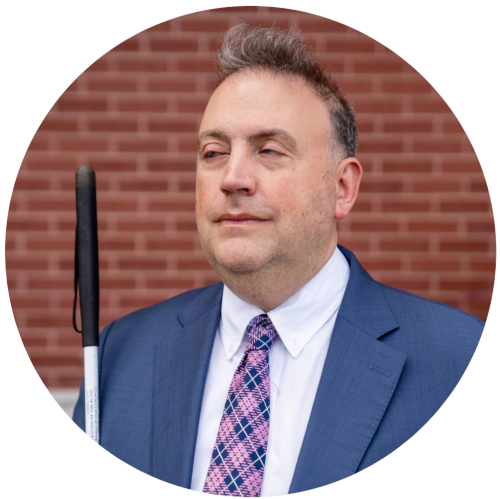
Mark Riccobono, President of the National Federation of the Blind, stated,
“We come together; we raise our voice together, in order that we, the blind, can fulfill our rightful place among ‘we the people.’
And while uncertainty can bring an uphill battle, the beauty of what the Federation has been doing for decades is that we continue to talk to members of Congress, getting them to recognize that our issues impact everybody on all sides of any political line.”
30 Days In: Advocacy on the Hill
At the start of the first 100 days into this administration, we held the annual advocacy event of the organized blind movement. Addressing a room filled with passionate advocates on February 3, 2025, President Riccobono opened the Washington Seminar Great Gathering-In with a powerful speech reinforcing the organization’s commitment to equality and systemic change.
_0.JPG)
“We the people, the first three words of the 52-word preamble to the United States Constitution, establish ownership in the structures and principles of our nation by the people, all the people, who live within our democracy,” Riccobono stated, emphasizing the importance of inclusion and then reiterating the Federation’s guiding principles, “We established our movement on the guiding principles that blind people have an inalienable right to independence, that blind people have equal capacity, and that only blind people themselves can legitimately speak for the blind community.”
The first Washington Seminar took place in 1973. Today, more than five hundred people from the fifty states, the District of Columbia, and Puerto Rico typically attend to learn and advocate for legislative initiatives that will improve the lives of blind Americans.
End Harmful Stereotypes
As the end of the first 30 days came to an end, there were concerns of public officials (elected and appointed) contributing to harmful stereotypes of blind and disabled people. Media outlets have an opportunity to expose those harmful stereotypes.
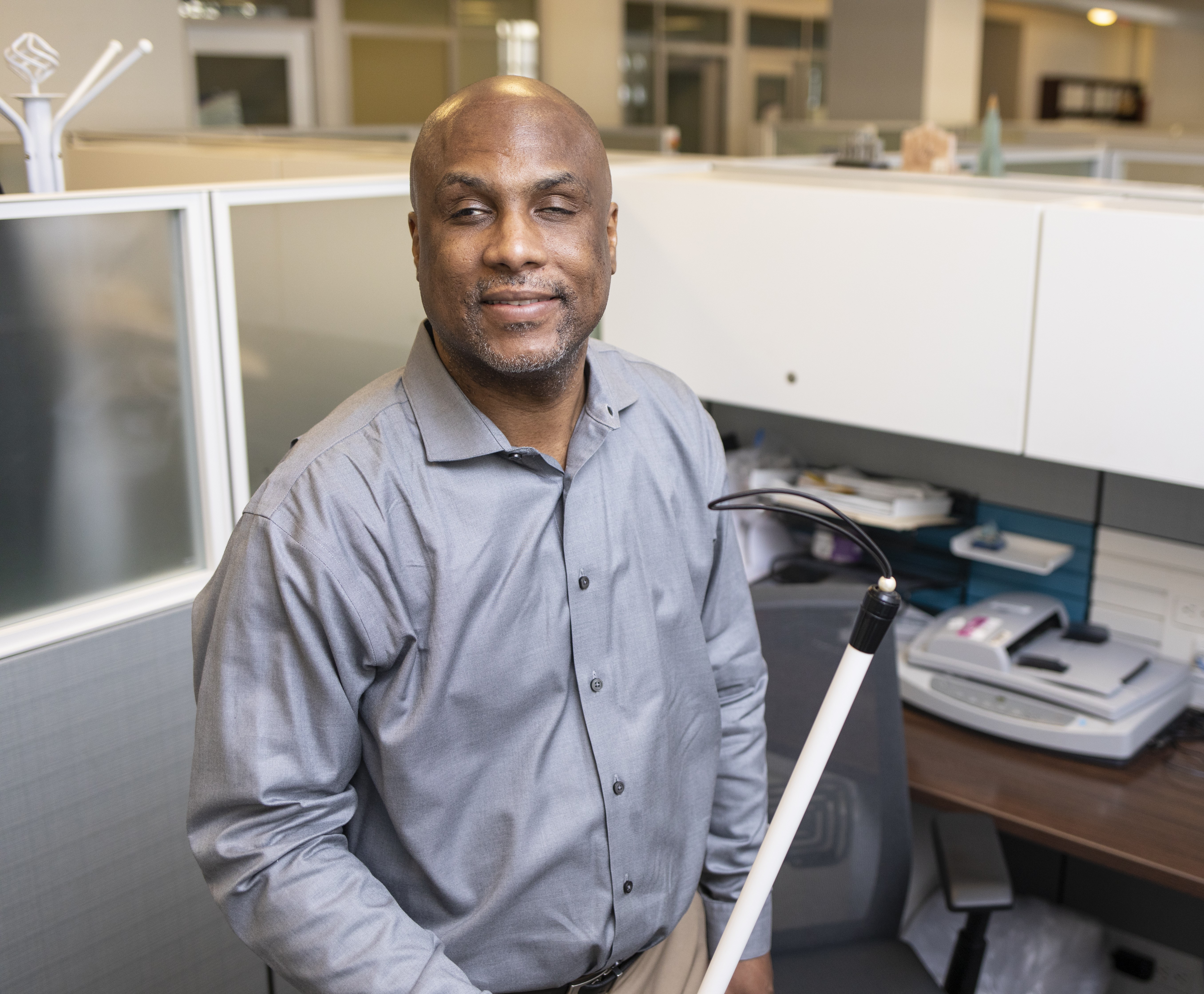
The National Federation of the Blind remains committed to challenging misconceptions and advocating for a society where blindness is understood not as a limitation, but as a characteristic that does not define one’s ability to contribute meaningfully.
- President Trump has specifically criticized disability hiring and recruiting policies and suggested workers with disabilities may be to blame for an air tragedy.
- The public ridicule and dismissive attitudes being used in the mocking of a blind Congressional expert witness in a February hearing perpetuate the very discrimination that blind Americans continue to fight against in employment, education, and civic participation.
These concerns are not new, but we need the media’s help. Hundreds of blind people meet with government representatives during the Washington Seminar to advocate for the nation’s blind, dismantle the barriers, and build understanding of what it means to be blind.
60 Days In: Fear Increases for Federal Employment & Agencies
This country is approaching 60 days into this administration, and the uncertainty continues to bring fear among our community.

- The most recent news regarding the Department of Education (DOE) gives us grave concerns. Among the education work of the DOE, it also houses the Rehabilitation Services Administration (RSA), which provides 79 percent of funding for vocational rehabilitation initiatives across the country.
- National Federation of the Blind Comments on Reduction in Force at Department of Education, Office of Civil Rights.
- The Department of Education’s Office of Civil Rights has already been dramatically reduced, which is concerning because of its role in enforcing the Individuals with Disabilities Education Act (IDEA) and other laws.
- The focus on firing probationary workers has disproportionately affected workers with disabilities, in part because those of them hired under the Schedule A hiring authority have longer probationary periods. Such workers have been fired without having been evaluated at all or, even worse, having received good performance evaluations. A court has ruled that the firings of probationary employees are unlawful, but this brings no immediate relief to the affected individuals.
- DOJ’s Office of Civil Rights (OCR) is responsible for enforcing the Americans with Disabilities Act (ADA) and other laws protecting the rights of blind and disabled Americans.
- A Washington Post report indicates that Social Security Administration (SSA) staff could be slashed by half, which could lead to interruptions in SSI and SSDI benefits as well as affecting blind employees there. The SSA’s civil rights office is reported to have been closed.
Law and Funding the Blind Depend On
“We seek a nation that will never go back on its commitment to and enforcement of our rights to live and work on terms of equality in this nation.”
The following are laws and funding that impact the lives of Blind Americans:%20(1).jpg)
- The Rehabilitation Act of 1973
- The Americans with Disabilities Act
- Individuals with Disabilities Education Act
- Special Education
- Vocational Rehabilitation
- Free Matter for the Blind
- National Library Service for the Blind and Institute of Museum and Library Services
- Older Blind Programs
- Protection & Advocacy
- Medicaid
Read our Laws and Funding Fact Sheet for more details.
Hope for the Future: Collective Action Champions
The National Federation of the Blind has hope. We know through our collective power, determination, and diversity that we can make a positive impact across all aisles.
“We champion collective action and we know that we are stronger together. By working together through any political situation, through any administration, through any disruption in the nation, we always find the best path for us, collectively as blind people.” – Mark Riccobono, President of the National Federation of the Blind
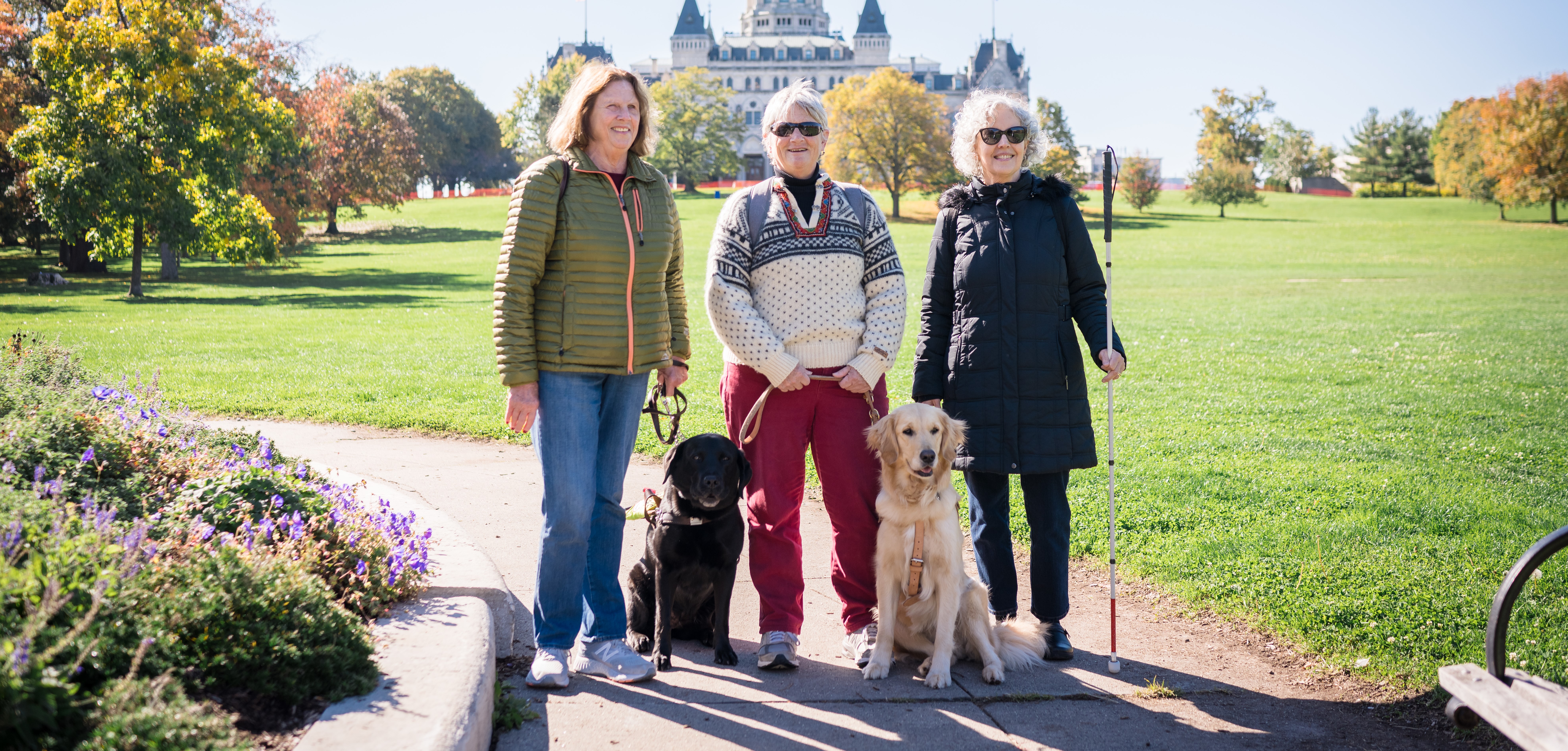
- Introduction of Blind Americans Return to Work Act, H.R. 1175, into Congress on Monday, February 10, 2025, with sponsor, Representative Pete Sessions (R-TX-17), and lead co-sponsor, Representative Kweisi Mfume (D-MD-7).
- Introduction of Access Technology Affordability Act, H.R. 1529, into Congress on February 24, 2025, with sponsor, Representative Mike Kelly (R-PA-16), and lead co-sponsor, Representative Mike Thompson (D-CA-4).
- Continuing Resolution that was passed by Congress this week and signed into law by President Trump last night contains language to further extend the Medicare telehealth benefits through September 30, 2025. Read our Letter to Congress Regarding the Expiration of the Extended Telehealth Benefits (March 5, 2025).
Meet Advocates and Experts at the Jacobus tenBroek Disability Law Symposium
While there are several sessions during the Jacobus tenBroek Disability Law Symposium, below are three key sessions that may be most interesting to you. This symposium is the leading disability law conference in the United States that brings nationally renowned disability rights advocates together. It is being held March 20-21, 2025, in Baltimore, Maryland at the National Federation of the Blind Jernigan Institute.
Thursday, March 20, 8:30–8:40PM: Remarks from National Federation of the Blind President, Mark Riccobono
(1).JPG)
President Riccobono recently said,
“The beauty of what the Federation has been doing for decades is we continue to talk to members of Congress, getting them to recognize that our issues impact everybody on all sides of any political line. And we try to tailor our messaging to the people we are talking to. Obviously, Republican, conservative members of Congress are going to have different interests than Democrats, but we believe that we can appeal to those interests in favor of making America better for blind people. And it's hard to say, I mean, there's been times when, yeah, things are an uphill battle, but you find champions in interesting places. And our strategy this year at our Washington seminar has really been to talk about disability laws, disability rights, and the funding for programs that exist today. And I think that's actually going to help us find some of those champions.”
Direct interviews can be requested by emailing [email protected].
Thursday, March 20, 12:30–2PM: The Criminalization of Disability: Exploring Intersectionality and Justice
This presentation will address the urgent issue of criminalization faced by disabled individuals, particularly disabled people of color and those who are multiply marginalized. Participants will engage in a comprehensive exploration of how disability is criminalized, focusing on the intersection of disability and the criminal justice system, as well as interactions with institutional authorities such as benefits offices, housing authorities, and educational institutions.
Friday, March 21, 8:30 AM–10:00AM: Advancing Disability Rights through Impact Litigation: A Year-in-Review and a Look at the Road Ahead
Attorneys from Disability Rights Advocates, a national non-profit legal center that specializes in impact litigation, will share their expertise to explore the role of impact litigation in the disability rights movement, highlight the major milestones in disability rights impact litigation that occurred in the last year, providing an in-depth discussion of legal developments, successes, and challenges, and discuss anticipated developments in the disability rights legal landscape and ways to zealously protect and advance the rights of the disability community.
Connect with Us
If you are interested in an interview with the National Federation of the Blind, please contact Stephanie Cascone or Chris Danielsen at [email protected], or call 410-659-9314, or text 443-934-0666.